Insight
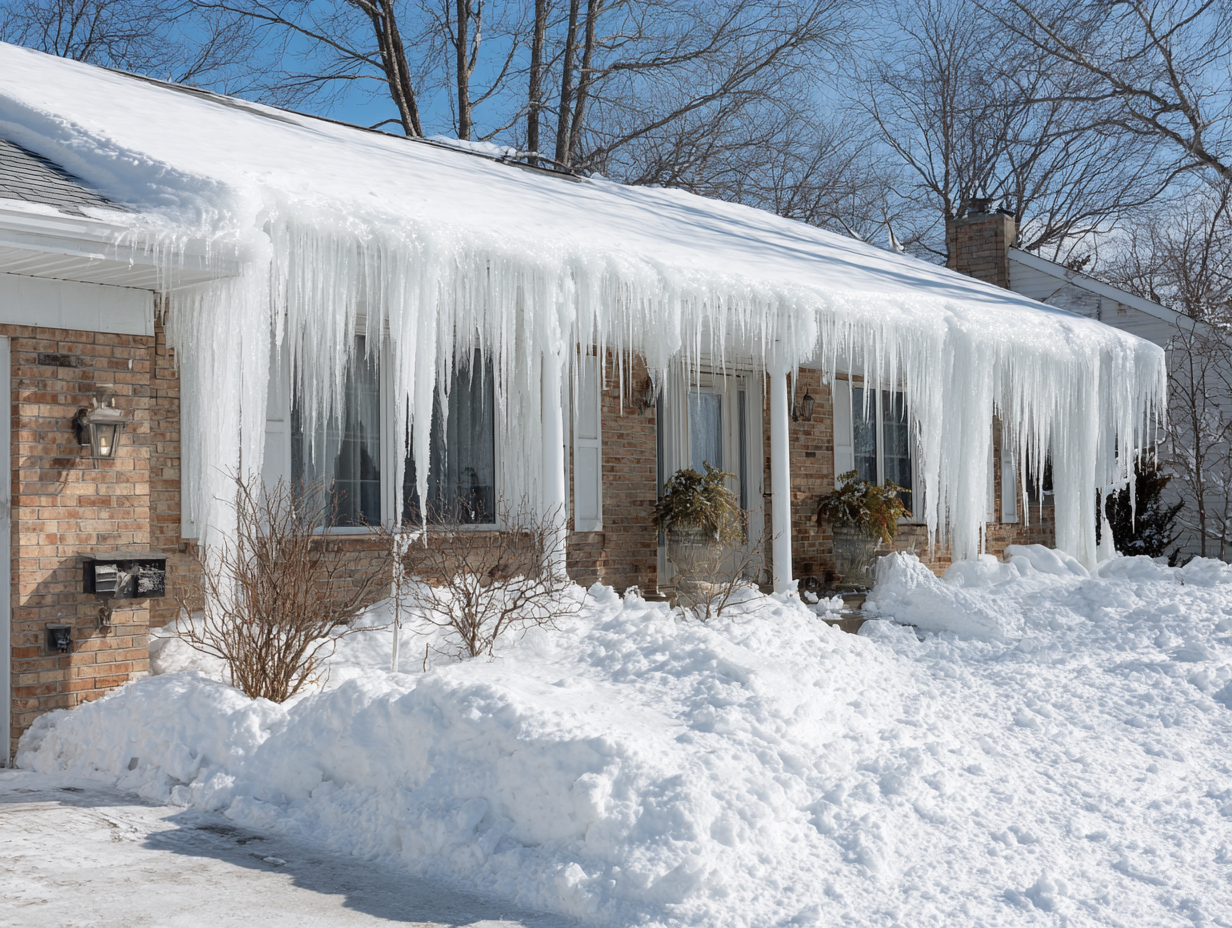
Ice Dams: How to Spot Them, What to Do and How to Protect Your Home
Ice dams are a common winter concern for homeowners, especially during periods of heavy snow followed by fluctuating temperatures. While they may seem harmless at first, ice dams can lead to roof damage, interior leaks and costly repairs if not addressed properly.
Understanding how ice dams form, how to recognize the warning signs and what steps to take can help protect your home during winter weather.
What is an Ice Dam?
An ice dam forms when heat escapes from the home into the attic, warming the roof surface. This causes snow on the roof to melt. As that water flows toward the colder edges of the roof, it refreezes.
Over time, this refrozen ice builds up along the eaves or gutters, creating a “dam” that prevents additional melting snow from draining properly. When water has nowhere to go, it can back up under shingles and make its way into the home.
How Do Ice Dams Form?
Ice dams are most likely to develop during freeze–thaw cycles, particularly when:
- Daytime temperatures rise above 32°F
- Nighttime temperatures fall back below freezing
- Snow remains on the roof for extended periods
These conditions are common during New Jersey winters, making ice dams a frequent concern for homeowners.
Signs You May Have an Ice Dam
Ice dams often go unnoticed until damage appears inside the home. Early warning signs include:
- Large icicles along roof edges or gutters
- Ice buildup at the roofline
- Water stains or discoloration on ceilings or walls
- Moisture or damp insulation in the attic
- Interior leaks during or after snow melt
While icicles alone do not always mean an ice dam has formed, they can indicate conditions that allow one to develop.
What to Do If You Have an Ice Dam
If you suspect an ice dam, acting quickly can help limit damage.
Safe steps homeowners can take include:
- Using a roof rake to remove snow 3–4 feet from the roof edge, if it can be done safely
- Applying calcium chloride ice melt (avoid rock salt or sodium chloride, which can damage roofing materials)
- Placing ice melt inside a fabric tube or nylon stocking and laying it vertically across the ice dam to help melt channels
Important safety reminder:
Avoid climbing ladders or accessing the roof during icy conditions. Roof and ladder accidents are a serious risk in winter weather. If you cannot safely reach the roof, it’s best to contact a qualified professional.
How to Prevent Ice Dams
- Improve attic insulation to limit heat loss
- Ensure proper attic ventilation
- Seal air leaks that allow warm air to escape into attic spaces
- Remove excess roof snow when conditions allow
These measures help keep the roof temperature more consistent, reducing the freeze–thaw cycle that leads to ice dams.
Frequently Asked Questions About Ice Dams
What temperature causes ice dams?
Ice dams typically form when daytime temperatures rise above freezing and nighttime temperatures drop below 32°F, creating a freeze–thaw cycle.
Are icicles a sign of ice dams?
Icicles alone don’t always indicate an ice dam, but large or excessive icicles can signal conditions that allow ice dams to develop.
Can ice dams cause interior damage?
Yes. Ice dams can force water under shingles, leading to ceiling stains, wall damage, insulation issues, and potential mold growth.
Does homeowners insurance cover ice dam damage?
Coverage varies by policy and cause of loss. Reviewing your homeowners insurance ahead of time is the best way to understand how damage may be handled.
How The Secret Insurance Agency Can Help
At The Secret Insurance Agency, we help homeowners understand how winter weather risks — including ice dams — may impact their coverage. If you have questions about ice dam damage, winter-related claims, or want to review your homeowners insurance, our team is here to help.
A proactive coverage review can help homeowners understand how winter-related damage may be handled before issues arise.